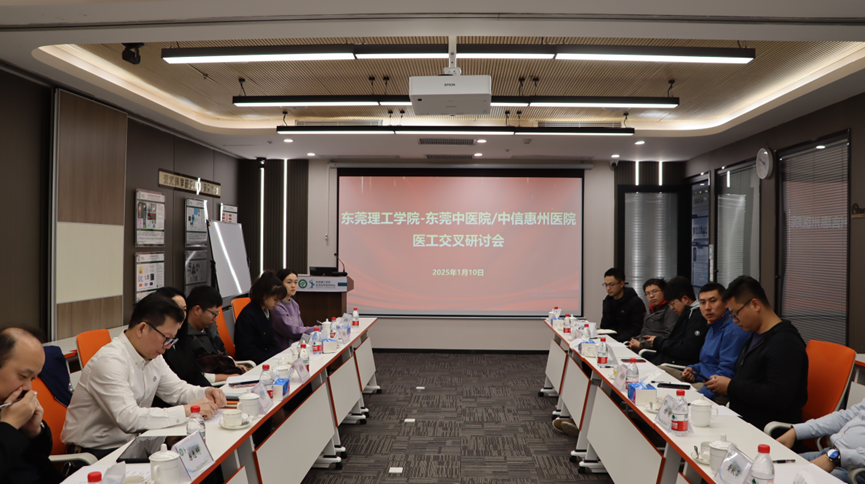
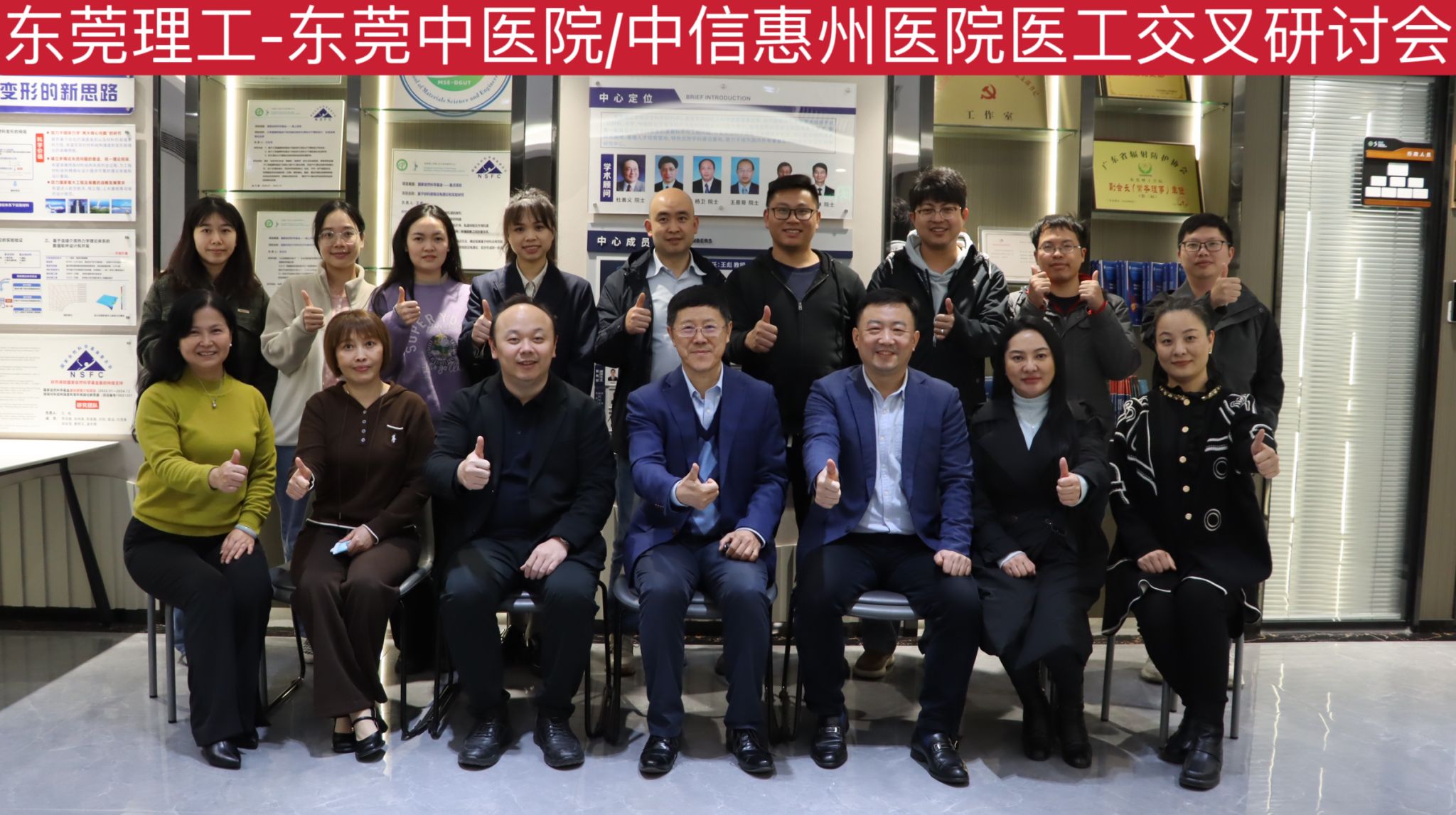
January 10, 2025 – Dongguan University of Technology (DGUT), in collaboration with Dongguan Hospital of Traditional Chinese Medicine and CITIC Huizhou Hospital, co-hosted a symposium titled "Medical-Engineering Integration, Innovation-Driven Development" at DGUT's Interdisciplinary Science Research Center. The symposium aimed to explore cutting-edge technologies and emerging trends in the field of medical-engineering integration through multi-party cooperation, thereby advancing medical technology innovation and talent cultivation.
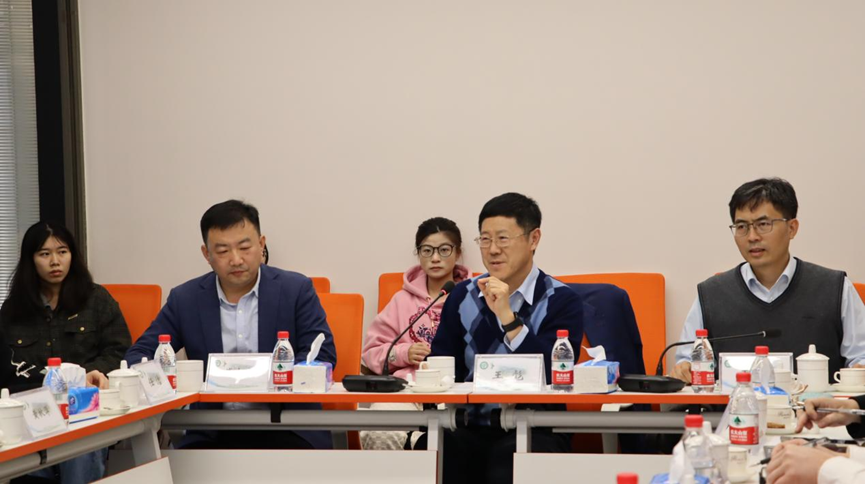
The symposium was opened by Professor Wang Biao, Dean of the School of Materials Science and Engineering and Director of the Interdisciplinary Science Research Center at DGUT. Dean Wang extended a warm welcome to the experts from Dongguan Hospital of Traditional Chinese Medicine and CITIC Huizhou Hospital, and emphasized the significance of medical-engineering integration in modern medicine. He noted that this symposium served as an important platform for the three parties to deepen collaboration and jointly explore new opportunities in the field, expressing hope that such exchanges would further promote research innovation and the translation of scientific achievements into practical applications.
Following the opening remarks, Professor Li Runxia, Research Dean of the School of Materials Science and Engineering at DGUT, gave a detailed introduction to the development history, research directions, and achievements of the school and the Interdisciplinary Science Research Center. She highlighted the school's commitment to both fundamental research and applied development in materials science, and noted that the Interdisciplinary Science Research Center serves as a key platform for fostering cross-disciplinary integration and driving technological innovation. Subsequently, Mr. Guo Jing, a faculty member of the School of Materials Science and Engineering, delivered an in-depth presentation on laser principles and their applications in the medical field. He elaborated on the fundamental principles and classifications of medical lasers, along with their wide-ranging clinical applications. Mr. Guo also showcased a series of research and development achievements made by the Interdisciplinary Science Research Center in the field of medical lasers. Professor Li Runxia then returned to the podium to present the latest research progress on biomedical metallic materials. The session concluded with Mr. Fang Zhike, Head of the Science and Education Section of Dongguan Hospital of Traditional Chinese Medicine, introducing the development of traditional Chinese medicine in Dongguan.
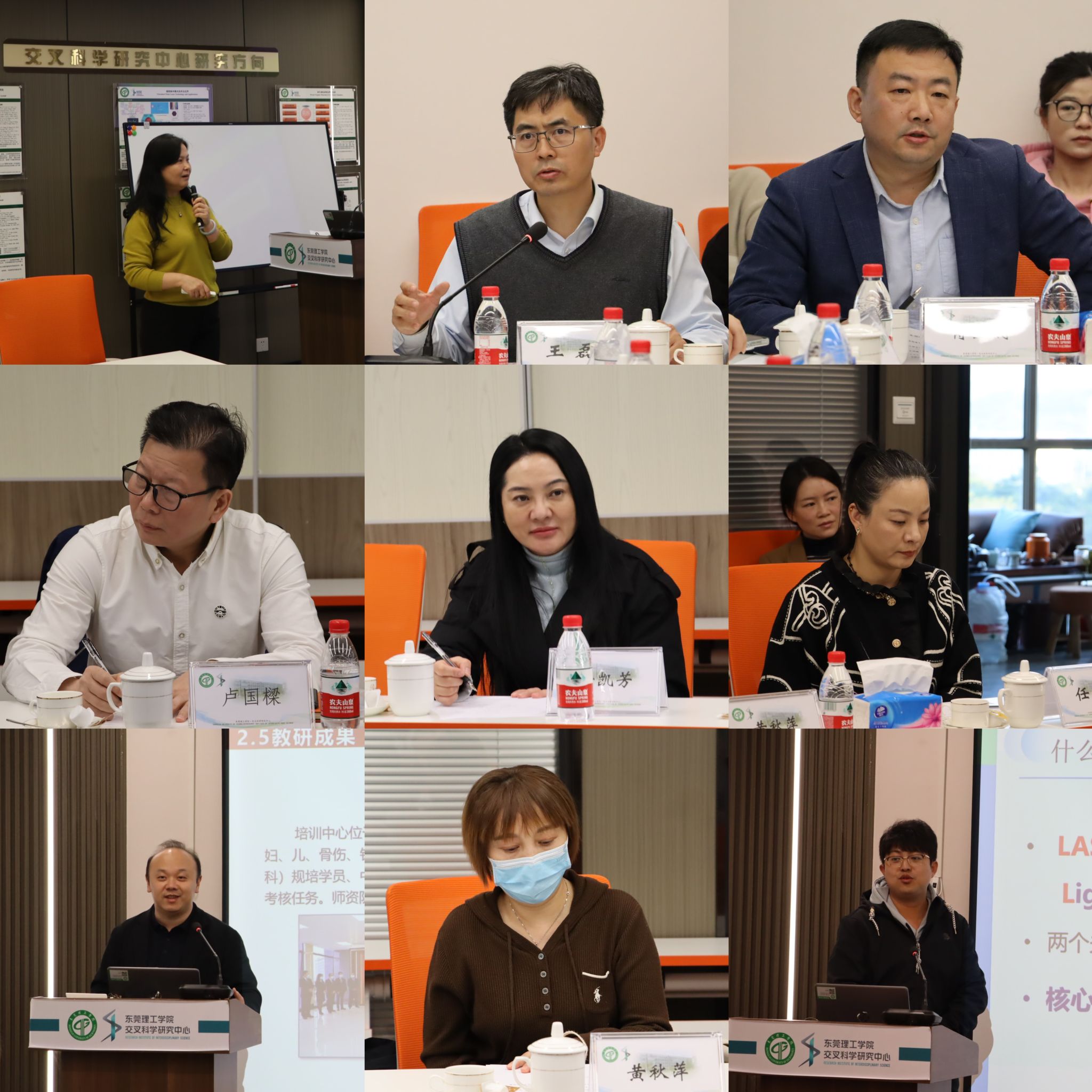
During the symposium, representatives from the three parties engaged in in-depth discussions on the development trends, challenges, and opportunities in the field of medical-engineering integration. The participants reached a consensus that medical-engineering integration represents a vital pathway for advancing medical technology innovation and talent cultivation. Moving forward, DGUT, Dongguan Hospital of Traditional Chinese Medicine, and CITIC Huizhou Hospital will continue to deepen their cooperation, jointly advancing research innovation and the translation of achievements in the field of medical-engineering integration, and contributing to the improvement of healthcare services and the advancement of medical science and technology. The successful convening of this symposium not only demonstrated the substantial achievements and broad prospects of the three parties in the field of medical-engineering integration, but also laid a solid foundation for further strengthening cooperation and jointly promoting medical technology innovation and talent cultivation.
Draft: Mo Yeping
First Review: Liu Zhao
Second Review: Li Runxia
Third Review:Wang Biao